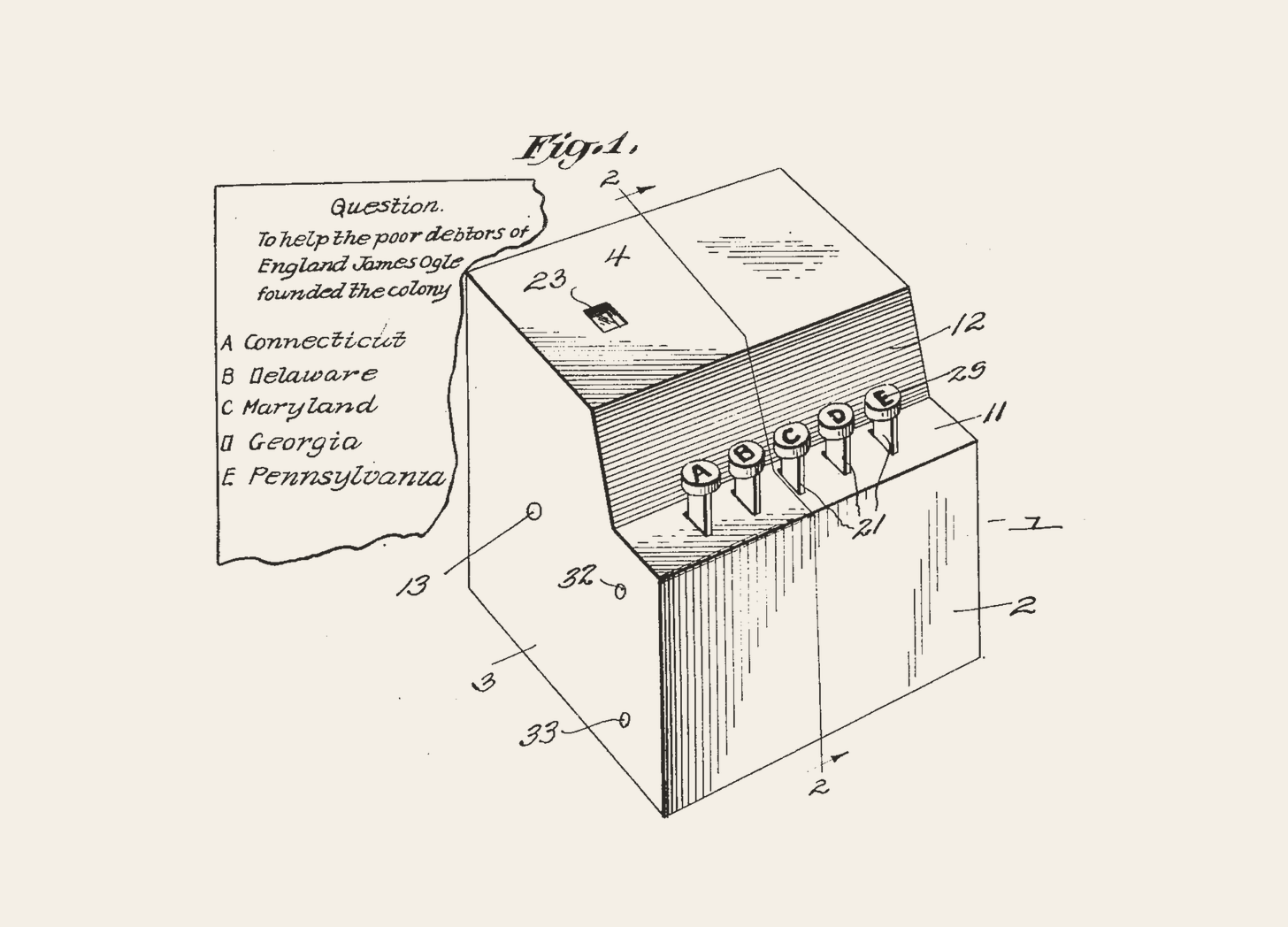
The Byte & Substack · 2026Are We 10 Years Away From the Last Lecture?Thinking about what changes—and what remains human—as AI enters education.
How we work
AI can do much more than help produce courses faster. It invites us to reconsider the experience itself: what learners explore, how they practise, how they receive feedback and where human guidance makes the greatest difference.
Adaptive learning is at the heart of what we do. It starts with a curriculum designed by people and responds to what each learner already knows, what they need to practise and the questions they bring. AI can make that responsiveness possible in new ways.
Making those possibilities useful takes an understanding of the technology, the learning and the organization. People decide what matters to learn, design the experience and assess how well it’s working. That’s where we begin.
Goals, people, knowledge and the work ahead.
What do people need to understand and do?
Learning, practice, human guidance and assessment.
Work with us
Every organization comes with a different question. You might be rethinking an established program, bringing a new one to life, or exploring what AI could make possible for your learners. We start with what matters to you.
Every engagement begins with a conversation. The work might include all of these stages or focus on a particular need; together we determine what makes sense for your organization.
Select a step to explore.
We look at your business goals, your learners and what they already know, and the programs, systems and expertise you have. Together, we identify what people need to understand and do—and how we’ll know the learning is helping them get there.
We work with your subject experts to identify learning outcomes, organize the knowledge people need, and develop the curriculum: explanations, examples, practice and assessments. We consider what learners already know and how they can build on it, whether we’re creating a new program or reimagining one you already have.
Together, we choose the tools, models and information sources that fit your organization’s goals, needs and requirements. We look at how they can help learning respond to the individual, and how your knowledge and your learners’ information will be managed and protected. That may mean configuring an existing model and connecting it to material you choose. Where training a model makes sense, we can plan that work with the technical expertise it needs.
Depending on the need, that might involve a library of well-designed prompts, a connected knowledge base that helps AI find relevant information, a second brain, or a private AI model. The choice depends on the learning, the information involved and how the organization wants to work.
We work with you to determine who your guides need to be: people who are empathetic, who care and who can connect with others. Depending on your needs, Lanthorn can hire, train and manage guides, or train and support your organization’s own guides. We make sure they have what they need to succeed. Guides review AI responses, coach learners through practice, assess progress and know when to step in. They help people develop judgment, communication and confidence, and connect what they’re learning to their own work.
Where ongoing support is part of the work, we look with you at learners’ progress and what learners and guides experience. People use that evidence to assess what’s working and improve the program over time.
One possibility
An association might have a professional development program that needs to keep pace with a changing field. Its members bring different levels of experience, but the existing courses take everyone through the same material.
Lanthorn could work with the association’s subject experts to develop curriculum and practice grounded in its knowledge. AI could help members explore questions and practise at their own pace, while human guides help them apply what they learn.
Let’s start a conversation.
People and AI
AI can support cognitive learning: explaining concepts in different ways, inviting questions, offering practice and feedback, and helping someone explore at their own pace. The curriculum gives that exploration direction; people remain responsible for the quality of the material and assessment.
Guides work with what emerges. They help learners test their judgment, communicate, collaborate, build confidence and apply ideas in situations where context matters. They can challenge an assumption, notice uncertainty and help people learn from one another.
Learning in the middle of the work
In an ME+ai roundtable, Stephen explores what it might look like for AI to help someone work through a specific skills gap using the data in front of them.
Watch the full ME+ai roundtable on YouTubeWhat you already know
An organization’s expertise lives in its people, conversations, documents and experience. AI creates new possibilities for connecting that knowledge and making it useful to learners as their questions and needs change.
Different organizations will need different approaches. We look closely at the models, platforms and information sources available, then consider what fits the learning, the people and the way you work.
As technology and your needs evolve, the learning can evolve with them.
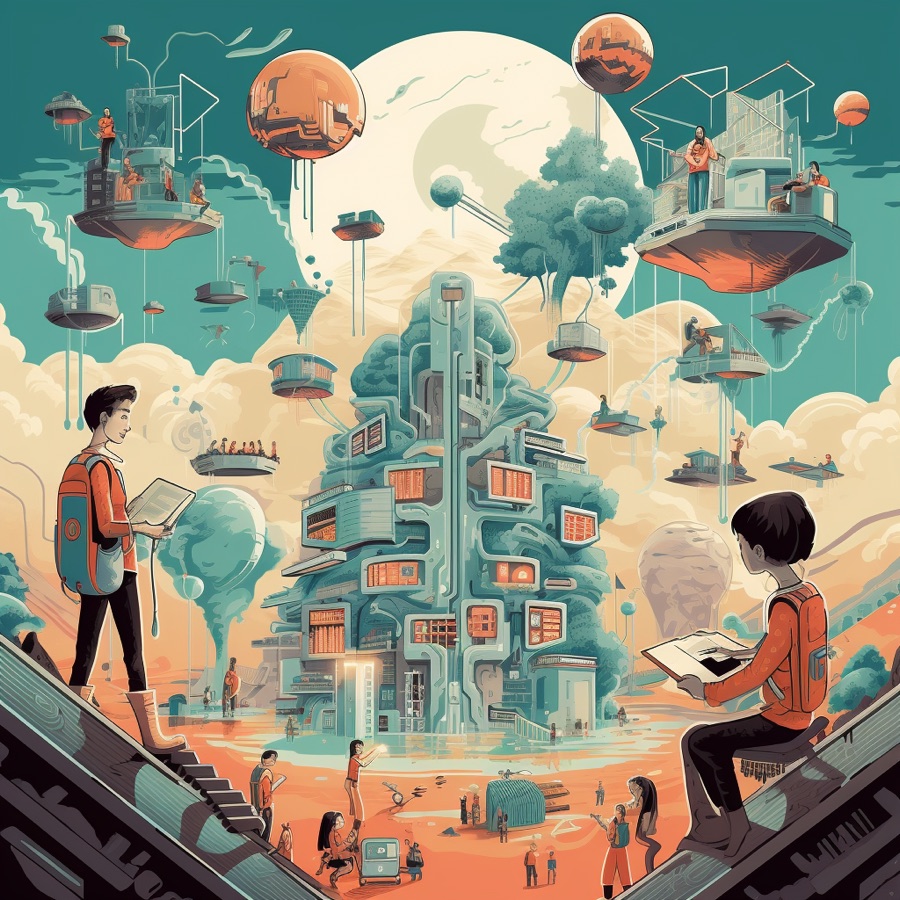 From Stephen’s writing · 2023The Future Is AdaptiveStephen’s earlier exploration of adaptive learning for adults.Read the article ↗
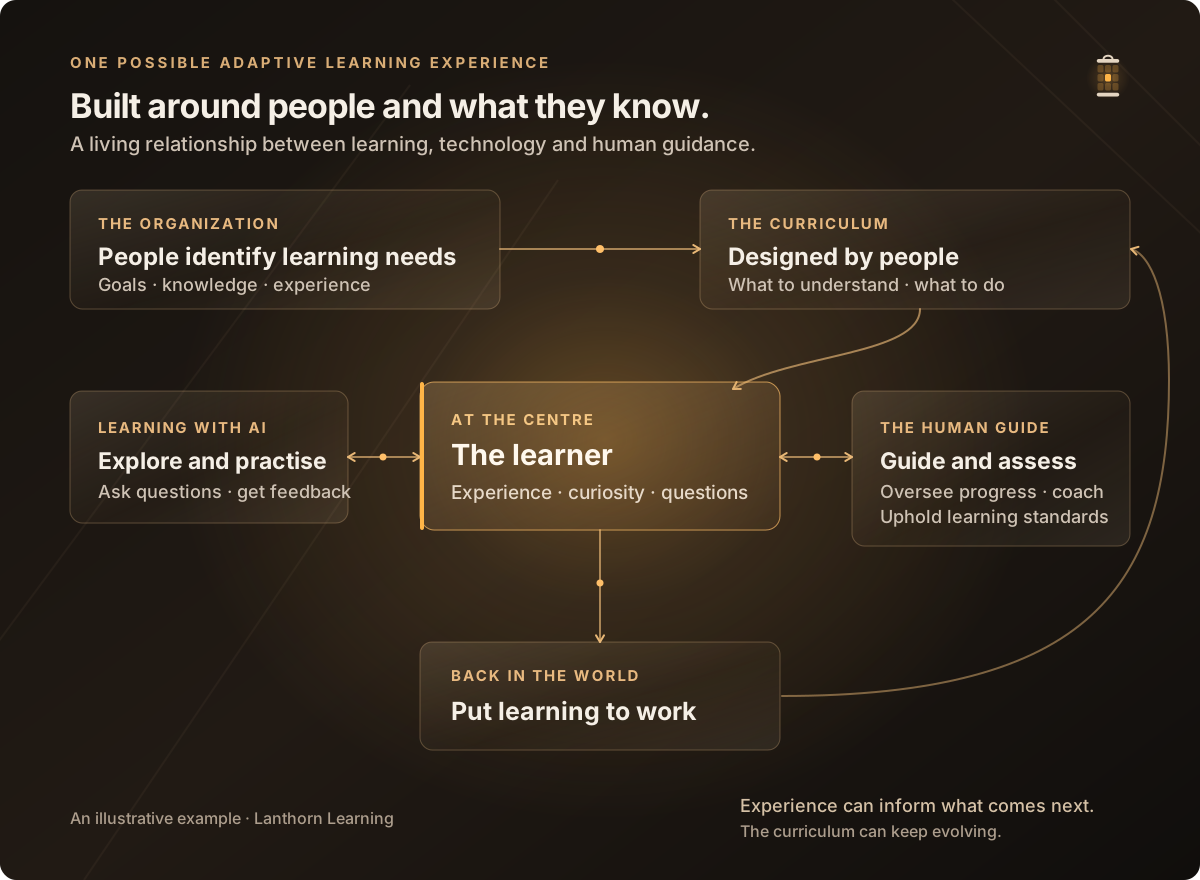
People design the learningPeople identify what learners need to understand and do, drawing on the organization’s goals, experience and chosen knowledge.
The curriculumDesigned for its learners, with purpose, practice and assessment.
The learnerBrings experience, curiosity and questions.
Learning with AIExplore, practise, ask questions and get feedback.
Human guidance and oversightPeople listen, coach and challenge; they oversee and assess learning and uphold its standards.
Back in the worldPut learning to work. That experience can help the curriculum evolve.
Why teaching
AI gives us a chance to question the limits education has long worked within. What if a learner could explore a subject as deeply as curiosity takes them? What if practice and feedback could respond to what they already understand? What if teachers had more room to listen, challenge and guide?
Those possibilities excite us. We pay attention to how the technology is developing, experiment with it and think about how it can serve the learning. Educators and subject experts still shape its purpose, decide what matters to learn and assess how learners are doing.
Practice, questions and judgment
Stephen and Leslie Hughes explore a Custom GPT built from Leslie’s own material—and discuss what happens when the output needs a human eye.
Watch the full ME+ai session on YouTubeWhen learning involves confidence and judgment, experience matters.
“Create conditions for the experience. Don’t lecture your way to it.”
Stephen Ghigliotty · The Byte